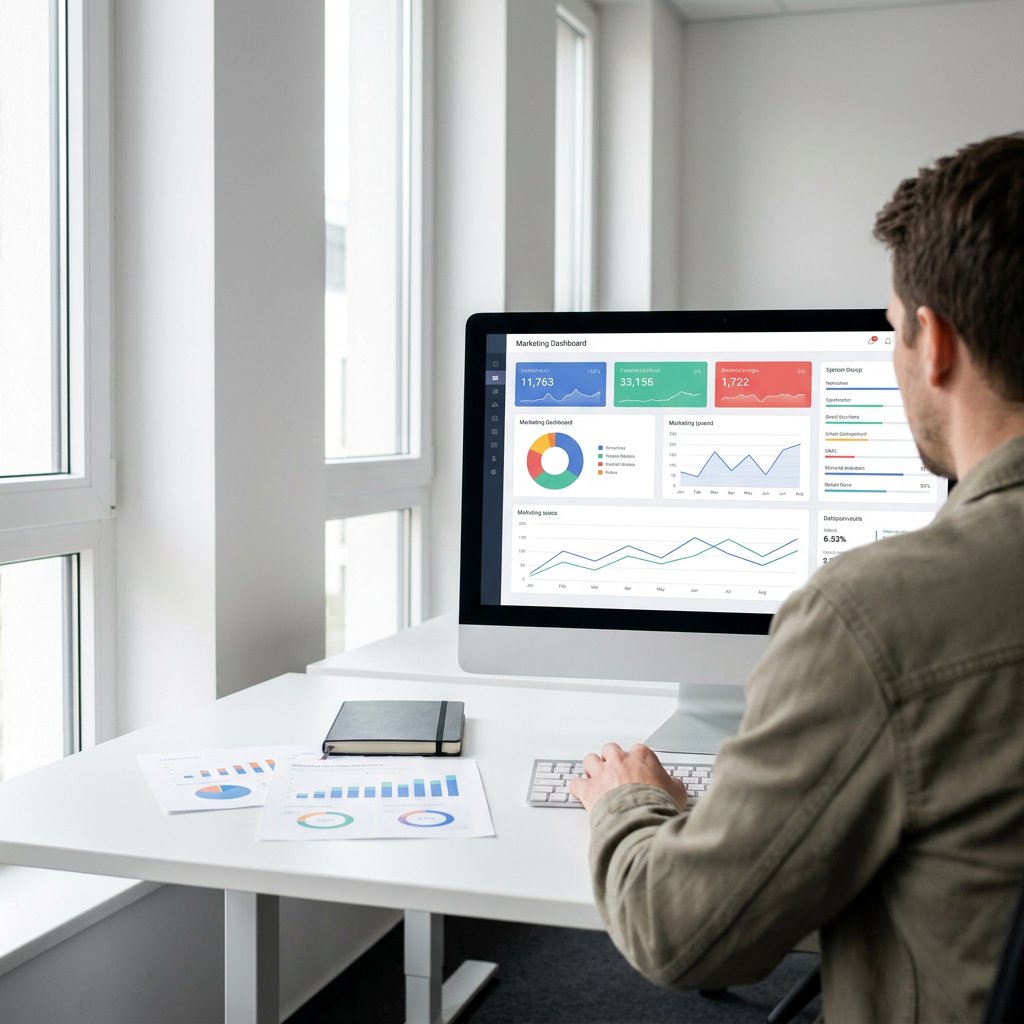
A strong animated video only truly pays off when you activate, measure, and optimize it in a targeted way after going live. Looking solely at views is too simplistic. You want to know if people keep watching, click through, and convert. In this article, you will get a pragmatic approach to distribution, video statistics, and experiments. From a 30-day plan to benchmarks for watch rate and engagement. So that your explainer video marketing doesn't stall after publication, but instead builds momentum. Also read Animations for online marketing: best practices.

Start with the desired effect, not the channel. Link your animation to 1 main and 2 secondary goals and translate them into measurable KPIs.
Set up your KPIs using the SMART method and determine in advance how you will measure using UTM tags, event tracking, and platform metrics. Create a simple decision rule for each KPI. For example: a viewing percentage below 35 percent in week 1 means the hook and thumbnail are retested. This prevents isolated actions and ensures you work with a clear strategy. Read more about measuring the effectiveness of your animation video to clarify KPIs, analysis methods, and optimization opportunities.
Views often give a distorted picture due to autoplay. These video statistics tell you whether your animated video is really working:
Target values to start with: a watch rate of 35-60 percent for videos of 30-90 seconds, a CTR of 1-3 percent on clear CTAs, and an engagement rate of 2-6 percent depending on platform and audience. Use these as a starting point and calibrate with your own data.
Make complex information clear, understandable, and convincing
Repeat the best-performing combinations and archive what doesn't work. This way, you build reach and relevance step by step without overwhelming your audience.
Open with a problem statement, a concrete outcome, or a visual change. Do not place your brand until after the hook. Test variants with different promises and rhythms.
Use high-contrast colors, a single keyword, and emotion or action in the image. Keep titles useful and specific, not clickbait.
Many views start without sound. Add subtitles and animate important keywords and numbers on screen.
Link one clear next step to a relevant landing page. Consider CTA animations to visually enhance buttons, end cards, and micro-animations. Ensure content match and fast loading times. Measure with UTMs and events.
Use 1:1 or 4:5 on feed-first channels, 16:9 on YouTube, and 9:16 in Stories and Reels. Keep the main video 30-90 seconds and create micro-snippets of 6-15 seconds.
Check demographics, location, traffic origin, and device. Do you primarily view on mobile? Speed up editing and enlarge typography. Are your viewers in a specific region? Adjust language and previews and publish around the peak hours of that time zone. Additionally, consider a multi-language animated video to increase your reach. Use lookalike audiences based on viewers who have watched 50 percent or more.
Comments, shares, and saves are strong signals for platform algorithms. Ask for targeted input with a concrete question, respond quickly, and shorten the distance between the brand and the viewer. Share valuable comments as a separate post and credit the author. Organize a short AMA session in the comments or a follow-up post in which you answer 3 viewer questions. This increases visibility and provides you with free, high-quality feedback.

Is your question not listed? Feel free to ask.
Ask your questionWork in sprints: publish, measure, optimize, and republish. Start with the hero version, create short cutdowns, test hooks and thumbnails, and use UTM tags. Strengthen your best-performing variant with a small paid boost and guide viewers to one logical next step.
View rate and average watch time for relevance, CTR on your CTA for interest in the next step, and engagement rate for additional reach. Combine platform data with landing page statistics to see the full funnel.
Aim for 35-60 percent at 30-90 seconds. Shorter durations may be higher, while longer ones are often lower. View this as a starting point and optimize your opening scenes, rhythm, and visual storytelling to increase retention.
Yes. Adjust format and length and write channel-specific copy. 16:9 for YouTube, 1:1 or 4:5 for the feed, 9:16 for Stories and Reels. Reuse the core, but test a unique hook and thumbnail for each channel.
Link production and distribution costs to revenue per channel. Use UTM tags, attribute clicks and conversions on landing pages, and calculate CPA and ROAS. Also include soft KPIs such as demo requests or sales qualifications.
At Animation Agency we believe that a good animation only delivers value when used smartly. Use this approach to build momentum after going live and achieve structural results from your video.
Make your animated video more interactive by including chapters, cards, or a simple quiz on your landing page. On YouTube, end screens, cards, and chapters work to guide viewers logically through your funnel. Retarget viewers based on view-through audiences with a relevant follow-up offer, such as a checklist or demo. Embed the video in email with a clear poster frame and test the subject line. Use UTM tags consistently so you can track ROI per channel and be creative. Do you want to target the video specifically for landing pages, email, and sales presentations? Check out animation for sales and conversion. Do you also want to utilize the video internally for onboarding or updates? Use it in your onboarding, knowledge base, or internal news update.

Whether it concerns an ambition, product, process, technology, or idea: we make visible what makes it special and translate it into imagery that is clear, convincing, and impossible to ignore.