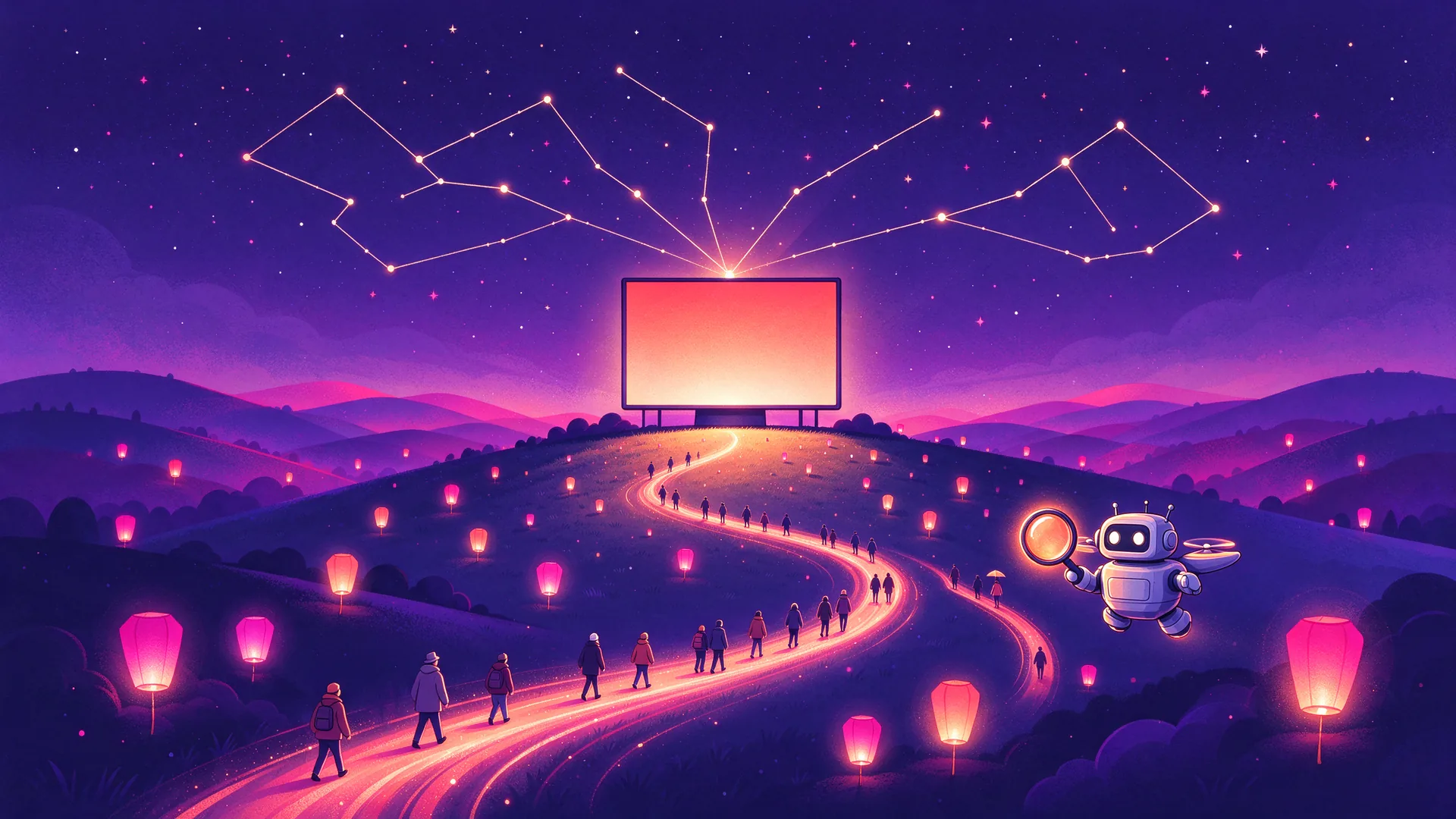
AI animation and SEO reinforce each other much more than is often thought. While SEO ensures your content is found, animation helps to clarify complex information faster, retain it longer, and make it easier to remember. Especially now that search behavior is shifting towards AI answers, zero-click results, and video-first platforms, strong visual content becomes more valuable. By intelligently deploying AI animation on your website, landing pages, YouTube, and knowledge content, you not only increase your visibility in Google but also your chances of appearing as a relevant source in AI-driven search experiences.
This is especially relevant for companies explaining technical, complex, or abstract propositions. A well-made AI animation can help with rankings, engagement, branded searches, and conversion, provided the video is part of a broader SEO approach. Therefore, it is not about “adding video because it is modern,” but about creating content that combines search intent, comprehensibility, and authority.
SEO has long ceased to be solely about blue links in Google. Users search via search engines, AI tools, YouTube, and social platforms, while search results increasingly display direct answers, summaries, and enriched content. Video is playing a stronger role in this development because visuals convey complex information faster than text alone.
AI animation fits in well with this. Especially for subjects such as software, data, processes, innovation, healthcare, finance, and high-tech, animation helps make complex material accessible. This yields SEO benefits when visitors stay on the page longer, better understand what you offer, and click through or convert faster.
Additionally, video increases your presence beyond the classic webpage. An animation can appear on your site, YouTube, in knowledge bases, campaigns, and social snippets. This allows you to build more semantic signals around your brand and expertise. This aligns perfectly with the trend you see in the SERP: less focus on ranking alone, and more focus on being visible and noteworthy across multiple search environments.
The top results regarding this topic reveal a clear common thread: SEO has not disappeared, but expanded. Google remains important, but users are orienting themselves more broadly. They seek answers via ChatGPT, Gemini, YouTube, and social video, and expect faster, more direct, and easier-to-explain information.
For your content, that means three things:
That is exactly where AI animation and SEO come together. Text remains the basis for indexation and context, but animation helps make the content stronger, clearer, and more engaging. As a result, the chances increase that visitors find your content valuable and that search systems view your page as helpful and relevant.
When people search for topics such as “how does this work?”, “what does this software do?”, “which solution fits my problem?”, or “what is the difference between option A and B?”, video is often the most logical format. This is reflected in classic SEO, but also in AI SEO and Generative Engine Optimization, often abbreviated as GEO.
GEO revolves around findability in generative search environments, where systems compile answers based on various sources. In that playing field, video helps because it adds extra context around your brand, subject, and expertise. Platforms with clear metadata, transcripts, titles, and descriptions are particularly interesting, as search engines and AI models extract a relatively large amount of structure from them.
An AI animation can be highly effective in this regard when built around real search intent. Think of an explainer video about a complex product, an onboarding animation for software, or a visual explanation of a process. If the surrounding page is strong in terms of content, with clear copy, relevant headings, and good technical structure, you support both traditional SEO and AI discoverability. Consider having an AI explainer video created to clearly explain complex products or processes.
It is important, however, that animation is not a substitute for text. AI models and search engines need context. The strongest combination is therefore usually:
Make complex information clear, understandable, and convincing
When you make a technical or abstract story understandable at a glance, you reduce the chance of visitors dropping off. This is relevant for SEO, because usage signals such as engagement, read on, and click-throughs are linked to the quality of the page experience. Especially in B2B, innovation, healthcare, software, and data-intensive propositions, an animation can make the difference between confusion and understanding.
A strong animation holds attention. Visitors watching a video typically consume more of the page than visitors who return directly to the search results. This does not guarantee higher rankings, but it does support a better user experience. And it is precisely this usability that aligns with how search engines and AI systems assess quality. Read more about how animations improve the user experience.
An animation is rarely limited to a single location. You can use the same core content on an SEO landing page, YouTube, social snippets, e-learning, sales presentations, and knowledge articles. This helps with omnichannel visibility and increases the likelihood that your brand will appear in various places around the same topic.
By consistently publishing content in which text, video, and explanations reinforce each other, you build recognition around themes. This helps not only with individual keywords but also with entities, brand associations, and topical authority. In other words, you are not only found for a single term but are increasingly seen as a relevant source within a subject.
Yes, AI can create animations or accelerate parts of the production process. Think of script support, style frames, motion tests, voice workflow, subtitling, language variations, and faster iterations. But for SEO and brand communication, the better question is not whether AI can create animations, but whether the outcome is truly clear, distinctive, and usable for your target audience.
Publishing only a quickly generated video rarely yields strong SEO value. Search engines and visitors benefit more from content that is sound in terms of substance, structure, and positioning. That is why a hybrid approach often works better: AI for speed and scale, human oversight for storytelling, nuance, branding, and content quality.
This also aligns with how Animation Agency operates. AI tools can make the production process smarter, but the animation must still fit your branding, message, and target audience. That is precisely where the real added value for SEO arises: a video that is not generic, but explains a subject in such a way that people watch further, understand better, and gain more confidence in your expertise.
A video on its own does not automatically rank well. SEO value arises primarily from the combination of page structure, content relevance, and technical findability. If you use AI animation on a page, pay attention to these elements:
For informative content, it often works well not to place the video above all the text without explanation, but rather to combine it with a short summary, context, and a logical next step. This way, you help both the visitor and the search engine.

Is your question not listed? Feel free to ask.
Ask your questionAI can assist with keyword research, content structure, topic clustering, transcriptions, metadata, and accelerating production. The best results are achieved when using AI for efficiency, but maintaining content, nuance, and positioning with human expertise.
Yes, AI can help with the creation of animations or parts thereof, such as scripts, visual variations, voice, subtitles, and rapid concept development. For professional brand communication, human direction remains important to keep the animation strong in content and visually consistent.
Yes, provided the animation is part of a well-structured page. Video can help with engagement, clarity, multi-channel distribution, and a stronger user experience. Without relevant textual context, the SEO impact is often limited.
Traditional SEO focuses primarily on visibility in search results and clicks to your website. AI SEO additionally focuses on findability in AI responses, summaries, and broader search environments. The foundation remains similar: high-quality content, a clear structure, and technical accessibility.
Yes, YouTube is valuable because videos there are provided with titles, descriptions, subtitles, and extra context. This makes the platform interesting for both traditional search engines and AI search environments. For many topics, YouTube is therefore a logical addition to your website.
Certainly. Especially in B2B, propositions are often complex and substantive. A good AI animation helps to quickly make processes, software, technology, or services understandable. This supports both informational search intentions and commercial considerations.
Don't choose, but combine. Text provides structure, context, and indexable content. Video makes the message clearer and more engaging faster. Together, they work more effectively than separately.
Service pages, product explanations, knowledge articles, e-learning content, software pages, and landing pages with a complex message particularly often benefit from animation. This is where video is most likely to contribute directly to understanding and conversion. Additionally, those comparing based on price often also consider the cost of AI animation.
Not every type of animation contributes to findability in the same way. The greatest SEO opportunity usually lies in formats that answer a specific search query or clearly structure a complex topic.
| Type AI animation | SEO value | Best application |
|---|---|---|
| Explainer video | Makes complex propositions understandable and increases engagement | Service pages, product pages, knowledge articles |
| Software or product explanation | Aligns well with how-to and problem-solving search intentions | SaaS, platforms, technical solutions |
| E-learning animation | Supports deeper content and longer session duration | Training, onboarding, internal knowledge, education |
| Short social snippets | Increase distribution and brand visibility off-site | YouTube Shorts, LinkedIn, social campaigns |
| Subtitled videos | Improving accessibility, user experience, and reuse | International reach, mobile-first consumption |
Do you work internationally or for multilingual audiences? With AI dubbing and translation, you increase the impact of your videos outside the Netherlands. Additionally, AI video subtitling ensures better accessibility and extra indexable context.
Analyses of the top-ranking pages show that video, and especially YouTube, is increasingly viewed as a relevant source in AI search environments. Therefore, it is smart not only to place AI animation on your own site but also to include distribution in your SEO strategy.
A practical approach looks like this:
This way, you not only build SEO on your website but also a broader digital trail around the same topic. This helps with both traditional search engines and AI systems that incorporate patterns, sources, and brand mentions into their interpretation of relevance. You can find practical tips in how to use your animated video after it goes live.
Anyone searching for “what are the new SEO techniques for AI?” is usually not looking for a completely new playing field, but wants to know what has become particularly important. For pages with AI animation, these are the key points to emphasize:
For animation-agency.nl, this means in practice that a page about AI animation becomes stronger when it not only explains exactly what AI animation is, but also shows for which situations, sectors, and communication goals it works. It is precisely this that makes content useful for both users and search engines.
The question “what is SEO for AI models?” is usually meant as: how do you ensure that AI systems understand and incorporate your content? The short answer is that the basics still correspond to good SEO, but with extra emphasis on context, trustworthiness, and clarity.
In practice, that means:
AI models draw signals from a wide web of sources. Therefore, it is smart not only to optimize individual pages but also to build a cohesive content structure with service pages, case studies, explanatory content, videos, and supporting knowledge articles.
AI animation is particularly interesting when you need to explain something that is difficult to capture in a single paragraph. This is often the case for organizations in high-tech, healthcare, finance, retail, software, and innovative services. Animation can also add significant SEO and usability value to onboarding, e-learning, and process explanations, because the content not only needs to be found but also understood immediately.
Do you have a complex product, a new platform, a technical service, or a story with many abstract steps? Then a custom animation helps convey information clearly, quickly, and consistently with the brand. Combined with strong SEO copy, this creates a page that both explains well and is easy to find.

Whether it concerns an ambition, product, process, technology, or idea: we make visible what makes it special and translate it into imagery that is clear, convincing, and impossible to ignore.