
Cutaway visualization in aftersales
A cutaway visualization shows the inside of a product, machine, or system without the need for physical disassembly. This is particularly valuable in after-sales: malfunctions, parts, maintenance steps, and the logic behind a repair become much faster to understand in a single image. Mechanics can see where a component is located, service advisors can better explain why work is necessary, and customers gain more control over what is happening. However, a cutaway is not always automatically the best format. Sometimes a static 3D visualization suffices for quick orientation. In other situations, a technical animation, exploded-view animation , or product instruction animation more explanatory power, for example, when operation, disassembly sequence, or service steps need to be clearly conveyed.
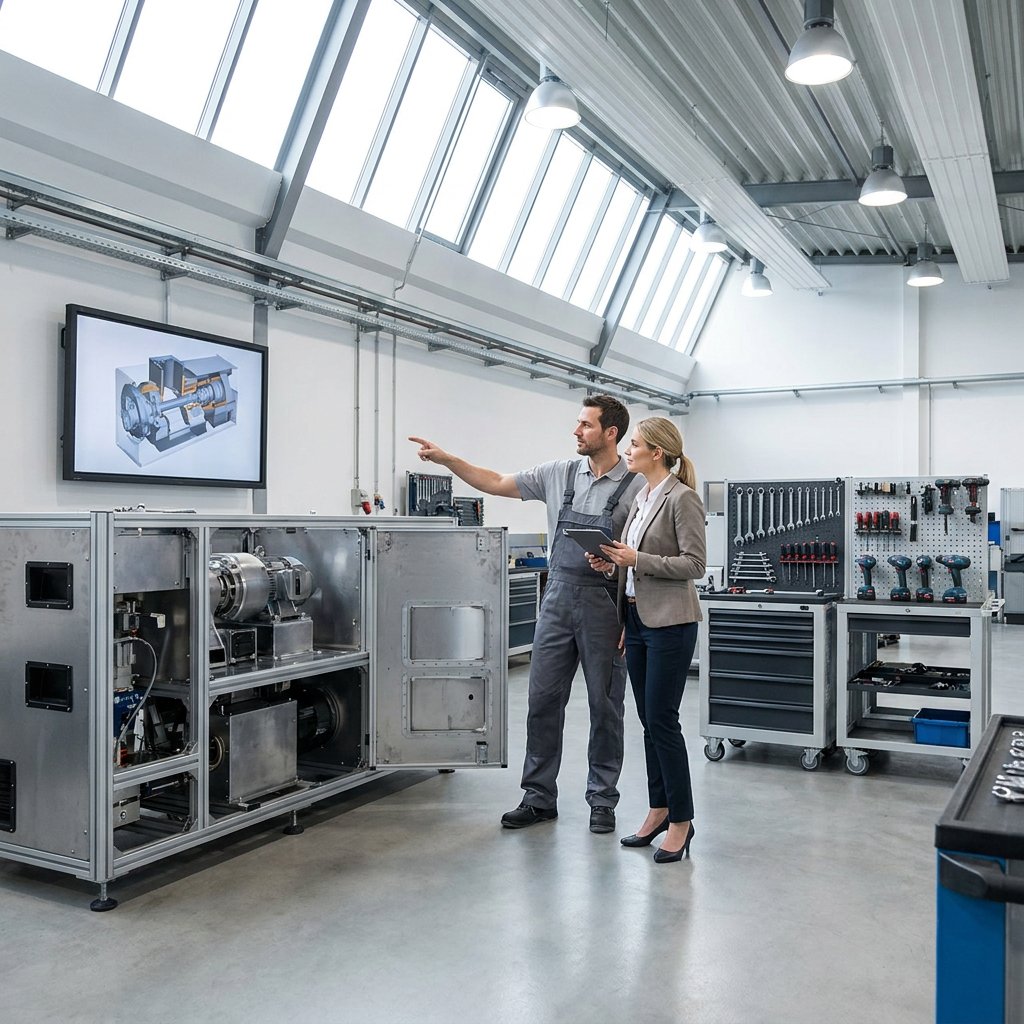




Why a cross-section visualization provides clarity faster than text or photos in after-sales
In service and maintenance, it is rarely just about what is visible on the outside. It is precisely the relationship between internal components that determines where a failure originates, which part wears out, and why a specific repair is necessary. A cutaway visualization makes this hidden technology visible in a single logical image: you see not only the part itself, but also its position, direction, and relationship with surrounding parts.
That often works faster than individual photos or blocks of text. A photo usually shows only one angle or one moment, whereas text forces the reader to mentally build the system step by step. In a cross-section, cause, location, and function come together. As a result, mechanics understand where to look more quickly, service advisors can explain maintenance better, and trainers receive a clear explanation that leaves less room for interpretation.
In after-sales, this translates into practical gains: fewer misunderstandings about parts, clearer repair explanations, and more confidence among customers who have to decide on maintenance or replacement. Especially with technical products, technical product visualization helps move from explanation to true understanding.
Where cutaway visualizations deliver the most return in service and maintenance
The most value is created when internal technology needs to be explained quickly, clearly, and consistently.
- In failure analysis and diagnosis, a cutaway or maintenance visualization to provide insight into failure sources, wear points, and maintenance zones without first having to open up a product. This accelerates the initial explanation and makes it plausible why precisely that area requires attention.
- For part explanations, context is often the difference between recognizing and truly understanding. A cutaway shows where a component is located, and exploded product views also clarify how it relates to surrounding parts and why that position is relevant for service, replacement, or accessibility.
- In service manuals and training, a cross-section works well when teams or partners repeatedly need to receive the same explanation. The visual prevents knowledge from becoming dependent on individual experience and makes complex structures more transferable.
- It is also practical in customer communication. When additional work, replacement, or maintenance is required, a visual clarifies what is happening internally more quickly than text alone or individual photos. This aids acceptance and prevents discussion regarding necessity or scope.
Make complex information clear, understandable, and convincing
Cutaway, exploded view, or 3D instruction: which form fits the question?
The best choice depends on what someone needs to be able to do after viewing: orient themselves quickly, understand components, grasp how it works, or perform an action correctly.
| Form | Strongest application | Above all, show | Fits especially well with |
|---|---|---|---|
| Still cutaway visualization | Quick orientation to the internal structure | The interior in context, with components in their actual place | Maintenance instructions, customer conversations, service pages, initial diagnosis |
| Exploded view animation | Making component relationships and structure logical | How individual components relate to each other and come apart | Parts logic, replacement, parts explanation, assembly and disassembly context |
| 3D instructional animation | convey step-by-step actions | Sequence, direction, access and the correct service action | Workshop instructions, training, maintenance procedures, partner enablement |
| Technical animation | Clarify the operation or cause-and-effect | Movement, interaction between parts, flow or the effect of a defect | Repair explanation, understanding malfunctions, product operation, more complex training modules |
If you are unsure about the format, do not start with the style but with the after-sales goal. If the primary goal is for someone to see where something is located, a cutaway is often sufficient. If someone needs to understand how something detaches, moves, or is executed in sequence, animation offers more guidance. If it specifically concerns assembly or placement after delivery, a product installation visualization often the most effective.
What makes an after-sales visualization useful in the workplace
An after-sales visualization is only truly usable if it is technically correct. That may seem obvious, but accuracy is essential, especially in service contexts. The visual must align with the correct product variant, the actual service context, and the terminology teams are already using. A beautiful image that shows just the wrong part, a deviating configuration, or an incorrect name immediately undermines confidence in the explanation.
In addition, the visualization must align with the process in which it is used. A technician needs different information than a service advisor or end customer. Therefore, it helps to clearly define in advance which question needs to be answered: where is the part located, why does wear occur, which step comes first, or why is extra work required? At Animation Agency such a process therefore does not start with effects, but with the communication challenge behind service and maintenance.
The level of detail and movement must also be chosen functionally. Too much detail slows down the reader and makes the explanation heavy; too little detail, on the other hand, omits crucial context. Finally, reusability pays off. If visuals can later be used in manuals, training materials, service portals, or product pages, updates and variations remain more manageable.
How to measure the effect of visualization in aftersales
The effect of visualization becomes clearest when you look at concrete improvements in explanation, alignment, and use.
- Measure whether the explanation time is decreasing. Consider the time a service advisor needs to explain a repair or additional maintenance, or the time a trainer needs to make a technical component understandable.
- Look at the number of follow-up questions and correction rounds. Fewer repeated questions regarding the location, function, or necessity of a component often indicate faster understanding and less difference in interpretation between teams and customers.
- Track how quickly decision-making regarding additional work proceeds. If customers or internal stakeholders approve faster because the need is clearer, the visual demonstrably contributes to better alignment.
- In digital deployment, usage signals are relevant, such as views, interaction with hotspots, progress through steps, and drop-off moments in an animation or instruction module. This data shows where explanation works and where friction still exists.
- Link the measurement to quality as well: less discussion during handover, more consistent training, faster understanding of components, and a more confident service process. These are often the signs that visualization not only communicates more beautifully but makes a real operational difference.





Ready to take your A to AA?
Whether it concerns an ambition, product, process, technology, or idea: we make visible what makes it special and translate it into imagery that is clear, convincing, and impossible to ignore.