Do you want to explain complex products or processes with crystal clarity without a camera or prototype? Detailed 3D animation makes invisible parts visible, accelerates sales, and takes onboarding and support to a higher level. In this article, I will take you step-by-step through the professional 3D workflow, the choices between 2D and 3D, the turnaround time, and the factors that determine the investment. Everything is based on practical experience and our expertise at Animation Agency in Eindhoven and Amsterdam.
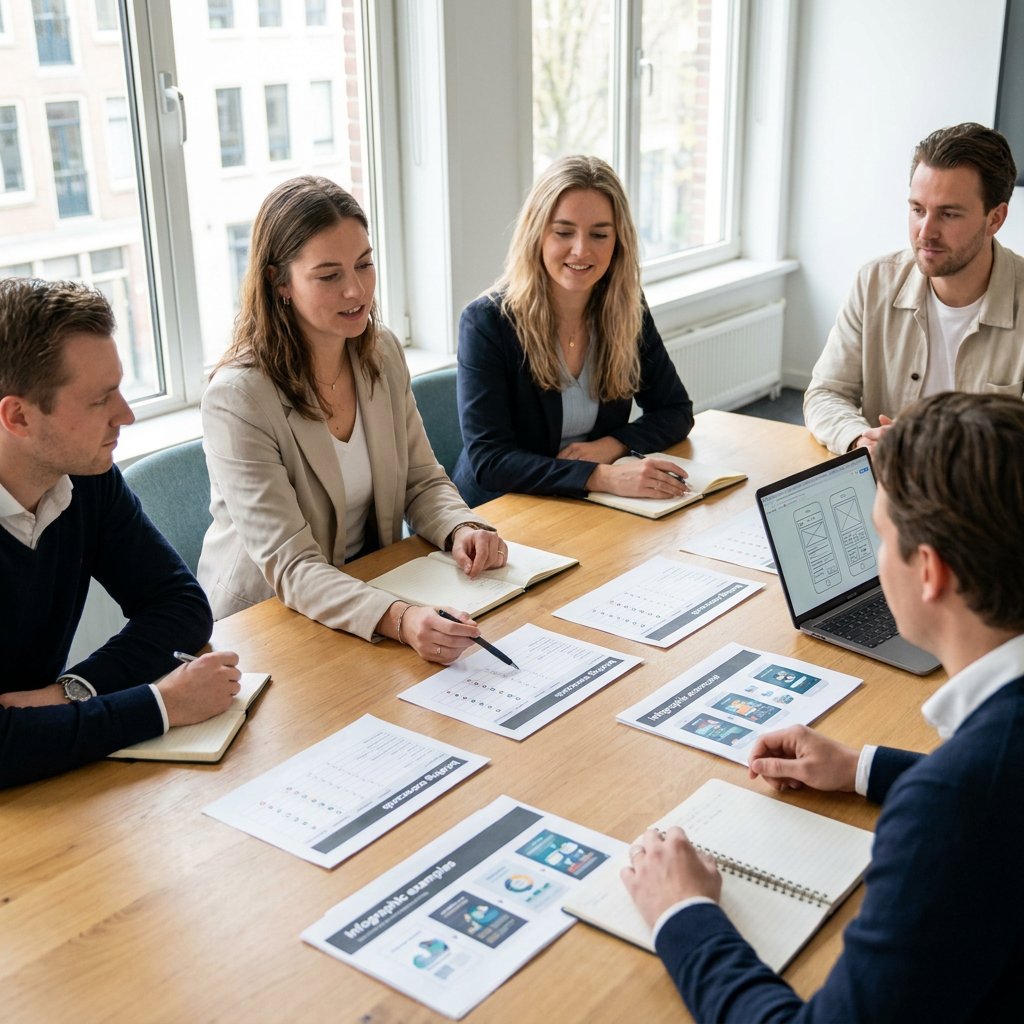
Every strong project starts with a clear goal. Who is your target audience, what message needs to stick, and in what context will the video be used? During the briefing, we refine the core message, style, and length, align deliverables, and gather available assets such as CAD models, brand assets, and reference material.
We translate the objective into a concept that offers structure and tension. The script establishes the storyline in understandable language. The storyboard visualizes scene by scene what you will see and hear. This way, we test pacing, framing, and visual hierarchy before production time goes into 3D.
We build products and environments digitally. Where possible, we import existing CAD data and optimize it for animation. We add materials and textures for realistic surfaces: metal, plastic, glass, and paint. For technical content, we often create exploded views and cross-sections to show internal workings.
Moving parts are equipped with a rig so that hinges, axes, and linear guides respond correctly. Using keyframes, we define movements that are logical, fluid, and informative. Physical simulations contribute to realistic dynamics such as collisions, granule flows, or fluids when the case requires it.
Lighting and camera control drive focus. With well-thought-out lighting setups and depth of field, we emphasize crucial details. We then render images in high quality. Depending on complexity, we choose ray tracing or real-time engines to find the right balance between speed and photorealism. You can find more about the distinction in 3D rendering vs 3D animation.
Voice-over, sound design, and music enhance understanding and emotion. During editing, we fine-tune timing and rhythm, add titles and callouts, and deliver variants for web, trade shows, or sales. Revision rounds ensure that the video aligns perfectly with your goals, branding, and channel specifications. For a complete overview per phase, view the step-by-step plan for 3D animation.
2D works well for abstract explanations, brand illustrations, and fast-paced campaigns with a friendly look. You choose 3D when depth, realism, and technical accuracy are crucial. Think of moving exploded views, cross-sections, simulations, and close-ups where reflections, transparency, and material behavior make all the difference. 3D is reusable: once built, models can be used later for new shots, variations, or stills. Often, a hybrid solution is ideal: 3D visuals combined with 2D callouts or UI overlays for maximum clarity and efficiency. Undecided between moving images and static visuals? Read 3D animation vs. 3D visualization.
3D animation is custom work. The investment is determined by length, level of detail, complexity of models and simulations, the number of scenes, desired render quality, and extras such as voice-overs and translations. The average turnaround time for a 30 to 60-second 3D animation is between 6 and 10 weeks, depending on complexity and feedback speed. Smart CAD delivery and a streamlined decision-making process shorten turnaround time and optimize budget and impact. Would you like a price indication and a breakdown of the factors? See 3D animation costs. For an in-depth explanation of schedules and iterations, read 3D animation turnaround time.
Technical explanations for industry and technology benefit most from 3D: you demonstrate internal workings, assembly sequences, and safety scenarios without downtime on the shop floor. Product presentations for sales and trade shows display variants, features, and configurations before production. In onboarding and support, 3D acts as a visual manual that removes language barriers. In the medical and construction sectors, 3D helps visualize anatomy or project phasing. Because assets are reusable, you achieve a long-term return on investment from a single production run.
For Vanderlande, we brought FASTPICK to life in 3D. We reconstructed transport systems and robots, visualized data structures, and created exploded views of critical modules. Through controlled camera movements and callouts, you can see exactly how components work together and the benefits this provides for throughput and reliability. This detailed 3D animation was used at trade shows and in sales meetings, where the combination of precision and clarity helped win decision-makers over faster.
Make complex information clear, understandable, and convincing

Is your question not listed? Feel free to ask.
Ask your questionThere is no fixed price, because every project is different. Length, complexity, CAD reuse, rendering quality, audio, and localization determine the investment. We are happy to collaborate on scenarios and packages so that you get exactly what works for your purpose.
Commonly used categories are 2D animation, 3D animation, stop-motion, and motion graphics. In practice, we combine techniques. For instance, 2D callouts and typography enhance the clear, realistic 3D shots when technical precision and brand consistency come together.
ChatGPT can assist with concept, script, and feedback on storyboard text, but it does not build or render 3D scenes. For production, you use professional 3D software and render engines. AI is an accelerator in preparation; the quality comes from the craftsmanship of the 3D team.
The best tool depends on your goal. For professional 3D production, you work with established suites and render engines that support CAD, simulation, and color pipelines. Choose based on desired style, complexity, integrations, and output channels.
Do you want to use 3D animation in detail for sales, onboarding, or trade shows? Our team in Eindhoven and Amsterdam collaborates from the briefing, provides honest advice, and delivers top-level visuals that make your story understandable and convincing. Ready to get started? Check out our page on having 3D animation made.

Whether it concerns an ambition, product, process, technology, or idea: we make visible what makes it special and translate it into imagery that is clear, convincing, and impossible to ignore.